Scientists report fossilised red blood cells in 115-million-year-old dinosaur bone
Tests on Aratasaurus bones from north-eastern Brazil found signs of red blood cells and heme, a compound involved in carrying oxygen in blood.
AI-written summary · The Chestnut Post · · How we use AI
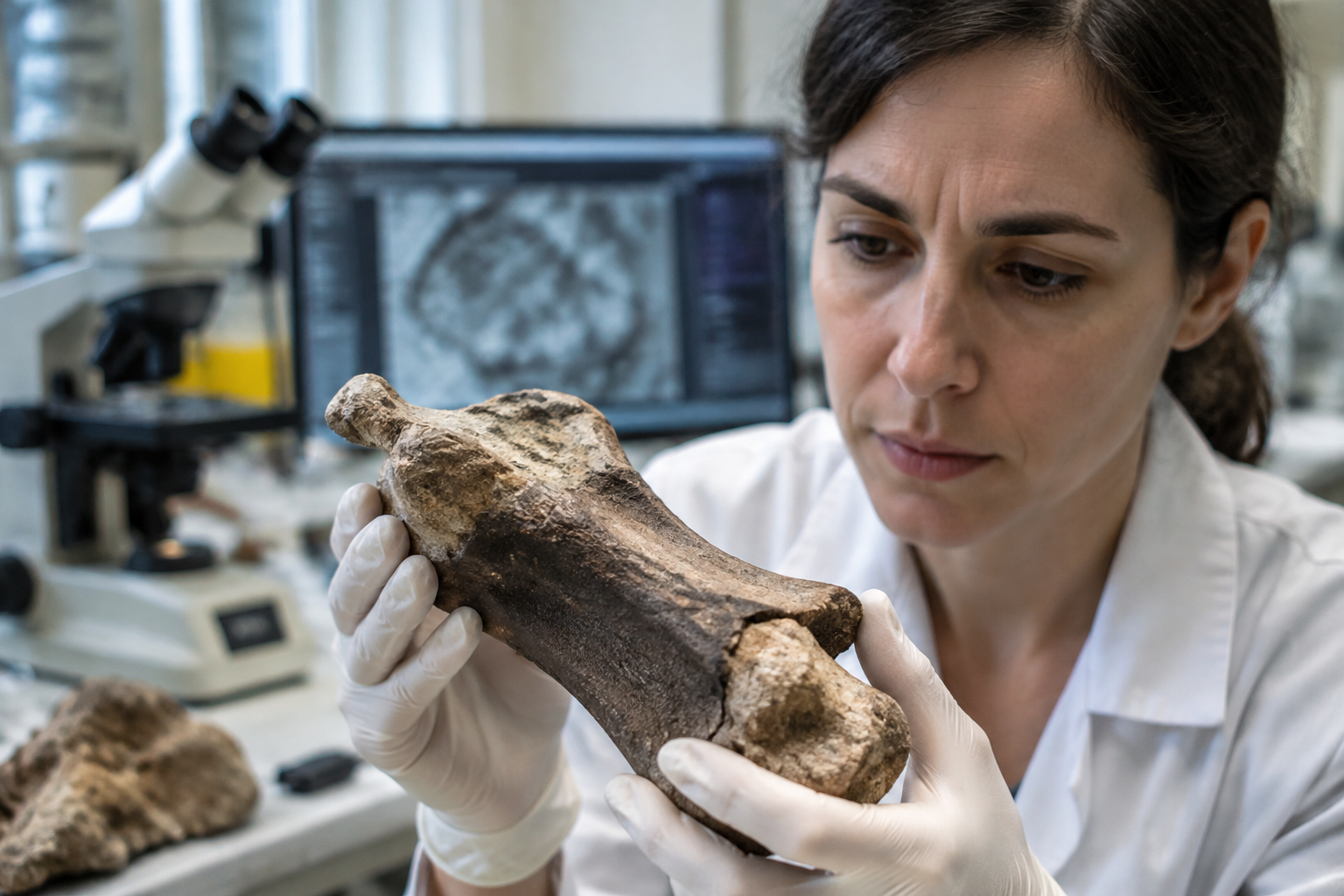
Researchers say they have found what appear to be fossilised red blood cells in the hind leg bones of an Aratasaurus, a small meat-eating dinosaur that lived 115 million years ago.
The dinosaur lived in what is now north-eastern Brazil. Chemical analysis of its bones identified heme, the organic compound that enables haemoglobin in blood to transport oxygen through the body.
The findings, reported by The Guardian, suggest the ancient remains contain both structures resembling red blood cells and traces of a molecule associated with blood’s red colour.
Originally reported by The Guardian. Read the full story at The Guardian